Steel Buildings vs. Traditional Wood Frame: Which is Better for Colorado?
Building in Colorado asks more from a structure than many other states. Snow loads can be intense, wildfire risks are real, temperature swings are dramatic, and elevation creates its own engineering demands. That’s why the debate around steel building vs wood frame in Colorado is more than a style preference—it’s about performance, longevity, and cost over time.
For property owners planning a workshop, barn, warehouse, or even a custom home, the right material affects everything from maintenance to insurance to resale value. While traditional wood framing has long been familiar, steel construction is gaining momentum for practical reasons.
So which one is better? The answer depends on what you value most. Let’s break it down…
Cost Comparison: Upfront Price vs Long-Term Value
At first glance, wood framing often appears less expensive. Lumber can carry a lower initial material cost, and many builders have decades of experience with stick-built construction. For smaller residential projects, that can look appealing.
But the initial price rarely tells the whole story.
When comparing steel vs wood construction, lifecycle cost matters far more than starting numbers. Steel often reduces expenses tied to maintenance, pest damage, structural repairs, and insurance exposure. In Colorado, where snow, moisture shifts, and wind can stress materials over time, those savings add up.
Wood-framed buildings may require:
● More frequent repairs
● Ongoing sealing or treatment
● Higher risk of rot or insect damage
● Potential framing movement with moisture fluctuations
Steel structures tend to lower those risks. Pre-engineered steel systems can also reduce labor hours, which may offset material costs.
For agricultural and commercial builds, many owners find that steel delivers a stronger return on investment, even if upfront pricing is moderately higher.
The real question isn’t, “Which costs less today?”
It’s, “Which costs less over 30 years?”
Often, those answers are different.
Durability in Colorado’s Climate Changes the Equation
Colorado weather doesn’t stay gentle for long.
Heavy snow in winter. Intense UV exposure at elevation. Dry conditions that increase wildfire concerns. Sudden wind events. Freeze-thaw cycles.
This is where metal building advantages become hard to ignore.
Steel Handles Snow Loads Better
Colorado mountain regions often demand structures engineered for substantial roof loads. Steel framing offers excellent strength-to-weight ratios and can be designed for serious snow performance.
Wood can perform well too—but long spans and heavy loads often push steel ahead.
Fire Resistance Matters
Wildfire awareness has changed how many owners think about construction materials.
Steel doesn’t ignite.
That alone has shifted decision-making for rural properties, barns, and homes in fire-prone zones.
Pests and Moisture
Wood faces familiar enemies:
● Termites
● Carpenter ants
● Rot
● Mold risks
Steel eliminates much of that concern.
Structural Stability
Wood expands, contracts… and can warp over time.
Steel stays dimensionally stable.
In a climate where conditions swing hard, consistency matters.
For sheer resilience, steel building vs wood frame in Colorado often leans toward steel.
Construction Timeline: Which Goes Up Faster?
Time is money—especially when weather windows are short.
Colorado builders often race seasons. Delays can carry serious costs.
Wood Framing Timelines
Traditional framing can move efficiently, but it often involves:
● More on-site labor
● Weather interruptions
● Longer sequencing
● Greater dependence on multiple trades
That can stretch schedules.
Steel Construction Timelines
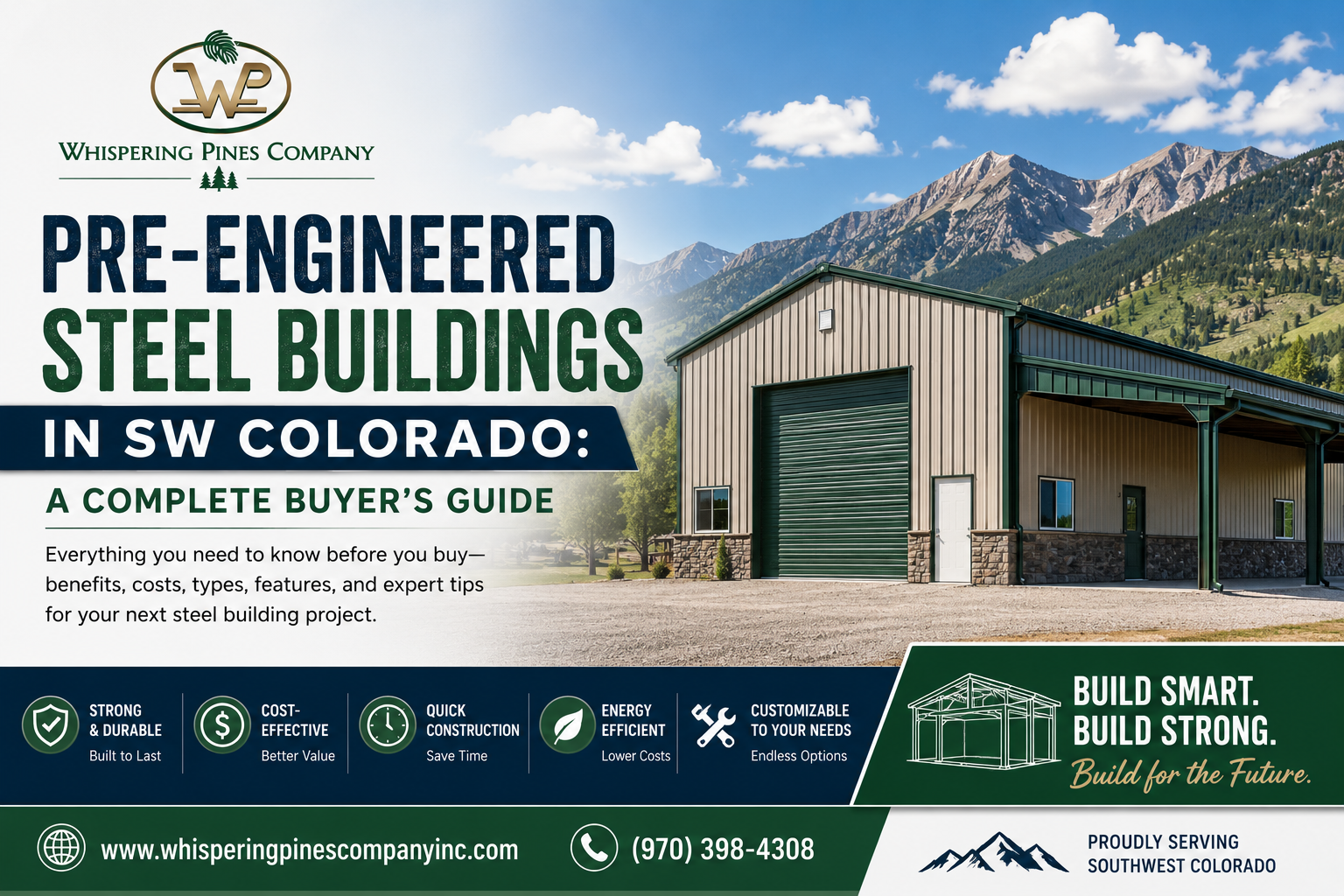
This is where pre-engineered steel systems stand out.
Many steel structures arrive fabricated and ready for assembly. That reduces field modifications and can streamline erection.
For:
● Agricultural buildings
● Commercial shops
● Warehouses
● Equipment storage
● Large-span structures
Steel often shortens build timelines significantly.
And faster completion doesn’t just save labor.
It reduces exposure to rising material costs and weather delays.
When speed matters, steel often wins.
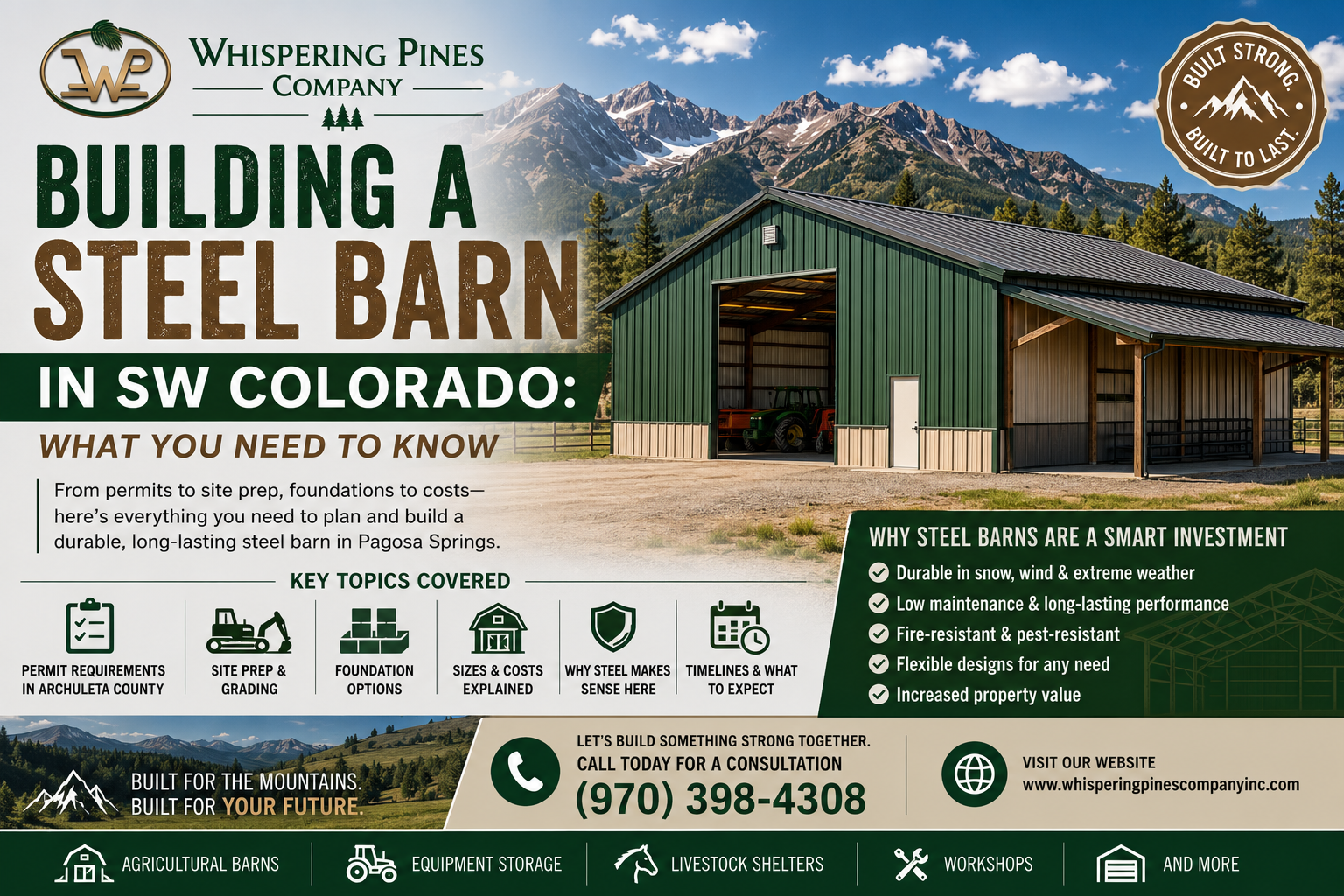
Barns: Where Steel Often Outperforms
Barn construction has changed.
Traditional timber barns carry visual charm, but modern demands often favor function.
Steel offers advantages for barns because it supports:
● Wide clear spans
● Equipment storage
● Livestock shelter
● Reduced maintenance
● Better durability under harsh conditions
For hay storage or agricultural use, moisture resistance alone can be decisive.
Many property owners exploring steel vs wood construction for barns ultimately prioritize utility over nostalgia.
And that makes sense.
A barn should work hard.
Steel was built for that.
Warehouses and Commercial Buildings: Steel Has A Clear Edge
For warehouses, workshops, and commercial structures, steel is often the obvious choice.
Why?
Because businesses care about:
● Span flexibility
● Expansion potential
● Lower operating costs
● Faster construction
● Structural reliability
Steel delivers across all five.
Clear-span interiors create more usable floor space. Future additions are often simpler. Maintenance demands stay lower.
For many commercial projects in Colorado, wood doesn’t compete well at scale.
That’s why so many modern industrial and commercial facilities favor steel systems.
The practical argument is hard to ignore.
What About Homes? Wood Still Has a Place
Here’s where the conversation gets more nuanced.
For custom homes, wood still offers strengths.
It remains widely used because it provides:
● Design flexibility
● Familiar residential construction methods
● Traditional aesthetics
● Easier remodeling in some cases
That said, steel-framed homes are gaining interest—especially where durability and fire resistance matter.
Some homeowners appreciate the long-term structural stability and lower maintenance potential.
Others prefer traditional framing.
For homes, the answer may depend less on “better” and more on priorities.
If character and conventional methods matter most, wood may fit.
If resilience and longevity lead the decision, steel becomes compelling.
Energy Efficiency Considerations
This often surprises people.
Many assume wood automatically performs better thermally.
But insulation systems matter as much as framing materials.
Modern steel buildings can achieve excellent energy performance through proper insulation packages and thermal break design.
Well-designed steel structures can support:
● Efficient climate control
● Lower operating costs
● Reduced air leakage
● High-performance envelopes
And because Colorado experiences both heating and cooling demands, that matters.
Energy performance today depends more on system design than on old material assumptions.
Maintenance: The Cost People Forget to Calculate
Maintenance rarely drives early decisions.
It should.
Wood can demand ongoing attention.
Painting.
Sealing.
Repairs.
Replacement.
Pest treatment.
Moisture monitoring.
Steel tends to ask far less.
And low maintenance becomes more valuable every year a building ages.
That’s one reason metal building advantages often become clearer after ownership begins—not just during planning.
Sometimes the smartest decision isn’t the one that looks cheapest.
It’s the one you barely have to think about later.
So, Which Is Better?
If the goal is:
Lower upfront cost for certain residential projects:
Wood may make sense.
Strength, speed, longevity, and reduced maintenance:
Steel often leads.
For many Colorado property owners, the steel building vs wood frame in Colorado comes down to climate realities.
And Colorado can be unforgiving.
That pushes many projects toward steel.
Especially for barns, commercial structures, workshops, and long-term investments.
Why Many Colorado Owners Are Choosing Steel
Momentum toward steel isn’t random.
It reflects changing priorities:
● Durability over decades
● Faster project delivery
● Lower upkeep
● Fire-conscious building choices
● Better value over time
That shift is practical, not trendy.
And it’s reshaping how people build across Southwest Colorado.
Build Smarter With Whispering Pines
Choosing between wood and steel isn’t just about materials.
It’s about how you want your structure to perform years from now.
At Whispering Pines, projects are approached with that long view in mind. From custom homes to barns, commercial structures, and steel buildings, the focus stays on craftsmanship, honest guidance, and structures designed for Colorado conditions.
If you’re weighing steel building vs wood frame in Colorado, Whispering Pines can help you evaluate the right solution for your property, goals, and budget.
Ready to build something that lasts?
Contact Whispering Pines today for a free quote and expert guidance on your steel construction project.
FAQs
Is steel construction more expensive than wood in Colorado?
Initial costs can sometimes be higher, but steel often delivers lower long-term ownership costs through reduced maintenance, durability, and faster construction timelines, making it cost-effective over decades.
Are steel buildings better for Colorado snow loads?
Often yes. Steel structures can be engineered for heavy snow loads and long spans, which makes them well-suited for mountain climates and demanding winter conditions.
Do steel buildings work for residential homes?
Yes. Steel-framed homes are increasingly used for custom builds, especially where fire resistance, structural stability, and low maintenance are priorities.
What are the biggest metal building advantages over wood?
Key advantages include durability, fire resistance, pest resistance, faster construction, and lower maintenance. These factors often make steel attractive for Colorado properties.
Is wood framing still a good option in Colorado?
Absolutely. Wood remains practical for many homes and smaller projects. The better choice depends on budget, use case, climate exposure… and long-term goals.