Steel Building vs. Wood Frame Construction: Which Is Right for Your Colorado Property?
You've got land. Maybe it's a few acres outside Pagosa Springs with a mountain view that still makes you stop and stare every morning. Maybe it's a commercial lot in Durango or a rural spread somewhere along the edge of the San Juan National Forest. Either way, you're staring at a blank slate and asking the same question every Colorado property owner eventually asks: what do I actually build — and what do I build it with?
The debate around steel building vs wood construction in Colorado isn't new, but it's one that deserves a real, honest look — not a generic answer copied from a national building guide written by someone who's never seen a Colorado winter. This is the Mountain West. The rules are different here. The snow loads, the wind exposure, the wildfire risk, the dramatic temperature swings between seasons — all of it changes the calculus.
Whether you're planning a residential steel building, a workshop, a barn, an equipment storage facility, or a full commercial structure, the decision between steel and wood framing will affect your budget, your timeline, your maintenance costs, and how well your building holds up decades from now. Let's break it down — material by material, condition by condition — so you can walk away knowing which direction makes sense for your property, your goals… and your long-term investment.
Understanding Steel Construction: What It Is and How It Works
What Is a Pre-Engineered Steel Building?
A pre-engineered steel building (PEB) is a system designed off-site using precise engineering calculations, then fabricated and assembled on-site. These structures are optimized for load-bearing efficiency, reducing material waste while improving strength.
In the context of steel building vs wood construction in Colorado, PEBs provide predictable performance under snow and wind loads. Unlike wood, which can vary in density and moisture content, steel components are manufactured to exact specifications. This precision is why many property owners turn to a metal building contractor in Colorado for projects requiring structural reliability.
Types of Steel Buildings: Rigid Frame, Clear Span, and Modular
Steel buildings are not one-size-fits-all. Rigid frame systems offer maximum strength for industrial and commercial applications. Clear span designs eliminate interior columns, making them ideal for open layouts. Modular steel structures provide flexibility for phased construction.
When evaluating steel building vs wood construction in Colorado, these variations matter. Steel allows customization without compromising structural integrity. A steel construction contractor in southwest Colorado can tailor the system to terrain, load requirements, and intended use.
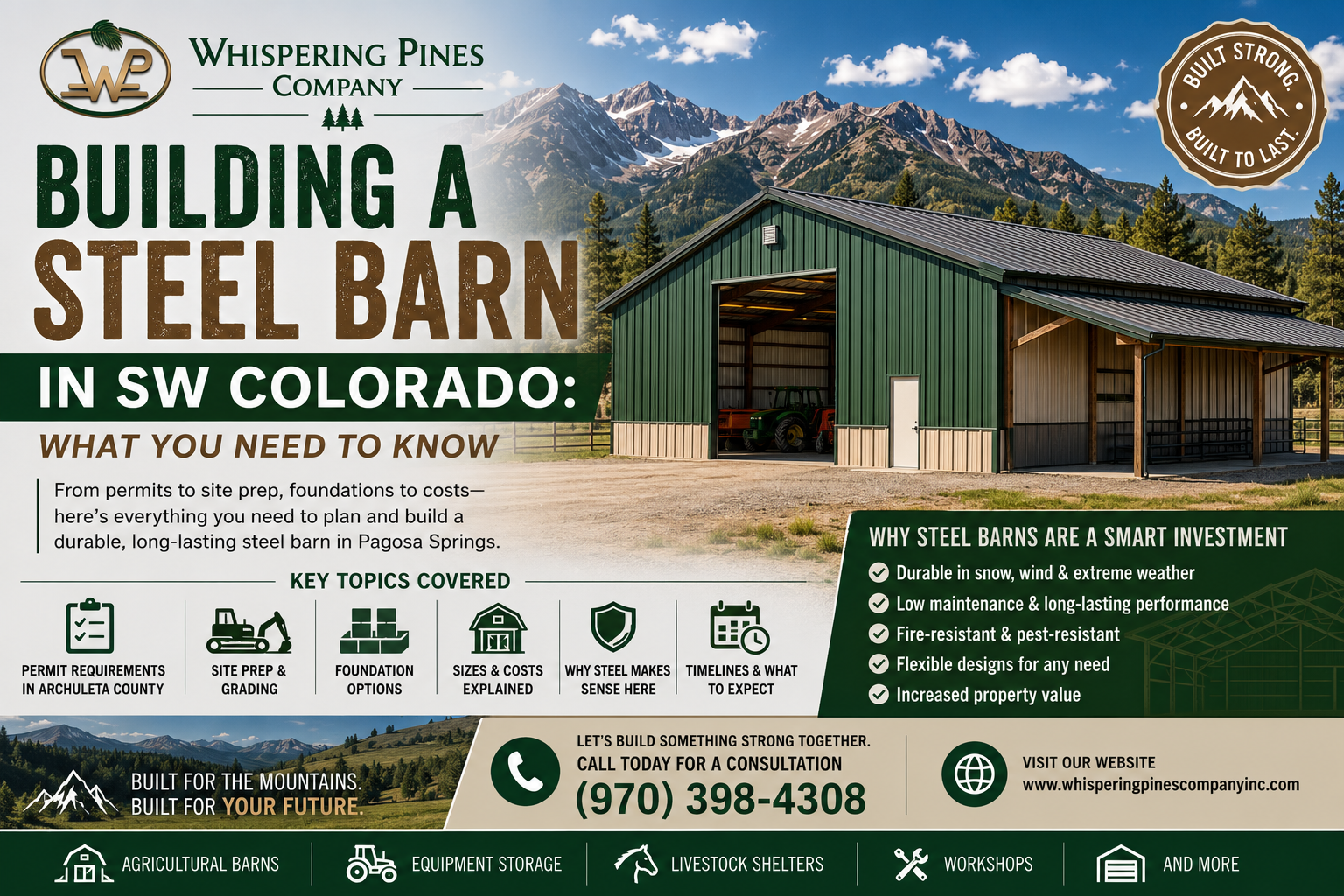
Common Uses: Workshops, Barns, Commercial Buildings, Agricultural Structures
Steel buildings dominate in functional spaces where durability matters more than decorative detailing. Workshops, barns, and agricultural facilities benefit from steel’s resistance to pests, moisture, and structural fatigue.
For example, a steel workshop or barn in Pagosa Springs must withstand heavy snow accumulation and temperature fluctuations. Steel ensures long-term usability without frequent repairs, making it a preferred option for durable buildings for Colorado weather.
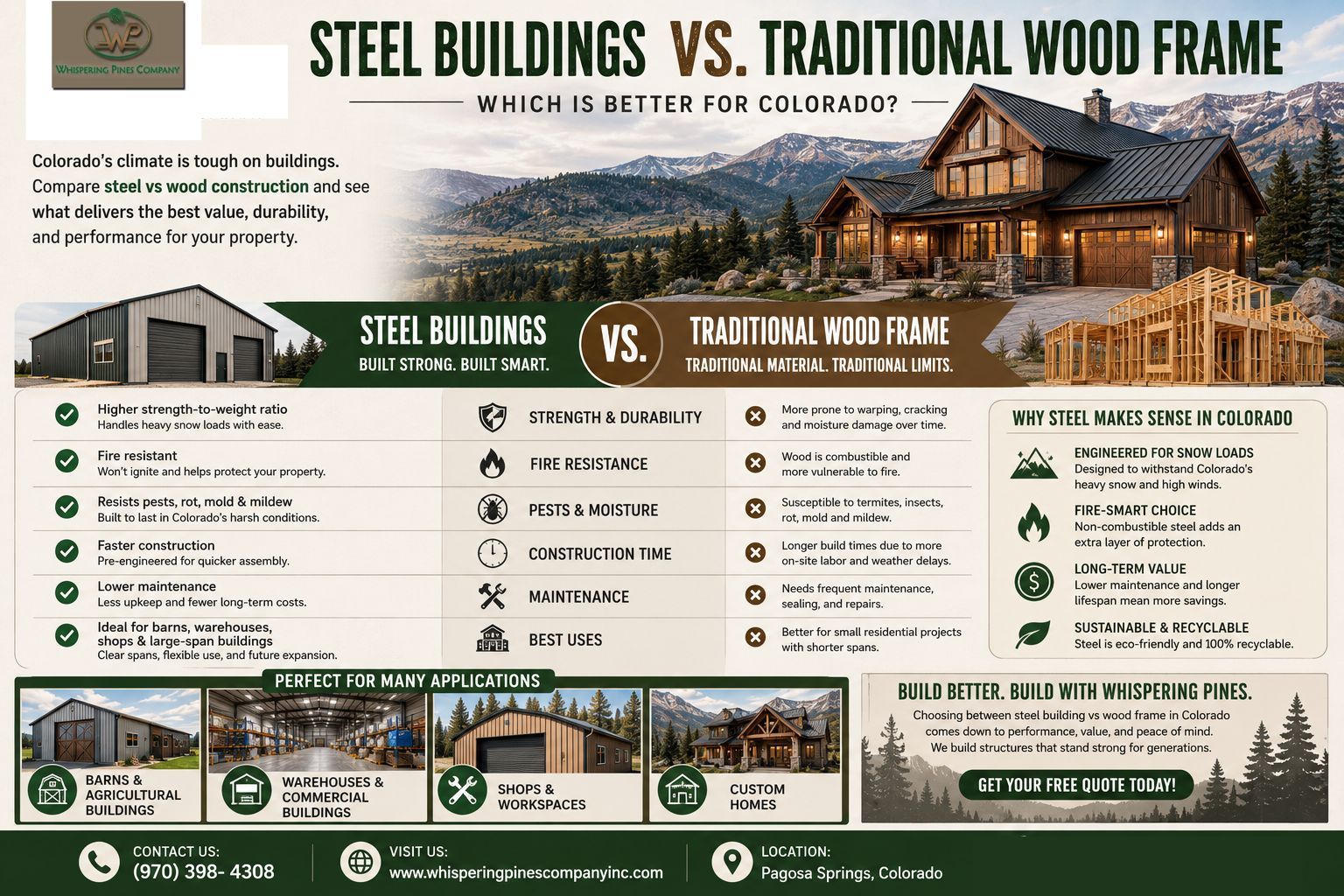
Steel vs. Wood: Head-to-Head Comparison for Colorado Conditions
Durability and Weather Resistance (Snow, Wind, Hail)
Colorado’s climate tests structural limits. Steel’s high tensile strength allows it to resist deformation under snow loads exceeding 60 psf. It also performs better against hail impact and high winds.
In steel building vs wood construction in Colorado, wood may flex under pressure but can weaken over time due to moisture absorption. Steel maintains its integrity, reducing the risk of structural failure in extreme conditions.
Wildfire Resistance — Critical in Southwest Colorado
Wildfire risk has reshaped construction priorities. Steel is non-combustible, meaning it does not ignite or contribute to fire spread. Wood, even when treated, remains vulnerable to ember exposure.
This makes residential steel buildings in Colorado increasingly attractive in fire-prone zones. Insurance providers often favor steel structures, reflecting lower risk profiles in steel buildings vs. wood construction in Colorado decisions.
Construction Timeline and Speed
Time matters, especially in regions with short building seasons. Steel structures benefit from prefabrication, reducing on-site construction time by up to 40%.
Wood framing requires cutting, fitting, and adjustments on-site, which can delay projects. For clients prioritizing speed, steel building vs. wood construction in Colorado often leans toward steel due to efficiency and predictability.
Long-Term Maintenance Requirements
Maintenance is where the gap widens. Wood requires sealing, painting, and pest control every few years. Steel, with proper coatings, resists corrosion and requires minimal upkeep.
For property owners seeking durable buildings for Colorado weather, steel significantly reduces long-term maintenance costs. This is a critical factor in any steel vs wood frame cost comparison.
Upfront Cost vs. Lifetime Value
Wood is typically cheaper upfront, making it appealing for budget-conscious builds. However, steel offers better lifecycle value due to lower maintenance and longer lifespan.
In steel building vs wood construction in Colorado, the true cost emerges over decades. Steel’s durability offsets its initial investment, making it a strategic choice for long-term property ownership.
A Good Visit
Beyond the technical comparison, it's worth remembering that no two Colorado properties face identical demands, so the right material often depends on how a structure will actually be lived in and used day to day.
Homeowners weighing residential steel buildings against traditional wood frame construction should factor in resale value, insurance premiums, and how each material performs specifically at their elevation and exposure — not just general climate averages for the region.
A site visit from an experienced local contractor can reveal soil conditions, snow-load specifics, and wildfire exposure unique to your lot- all of which shape whether steel, wood, or a hybrid approach delivers the best long-term return on your investment.
When Steel Is the Better Choice in Colorado
Large Clear-Span Spaces (Workshops, Garages, Equipment Storage)
Steel excels in creating wide, open spaces without interior supports. This is essential for workshops, garages, and storage facilities.
A steel workshop or barn in Pagosa Springs benefits from clear-span design, allowing flexible use of space. This advantage highlights why steel building vs wood construction in Colorado often favors steel for functional structures.
Commercial and Agricultural Applications
Commercial and agricultural buildings demand durability and efficiency. Steel meets both requirements while reducing operational downtime due to repairs.
A steel construction contractor in southwest Colorado can design structures that support heavy equipment, livestock, and storage needs without compromising safety.
Properties in High Fire Risk Zones
In wildfire-prone areas, steel provides a critical layer of protection. Its non-combustible nature reduces structural loss during fire events.
This makes residential steel building in Colorado a practical choice for properties located in high-risk zones, reinforcing the advantages seen in steel building vs wood construction in Colorado.
Long-Term Investment in Durability
Steel buildings are built for longevity. With proper maintenance, they can last 50+ years without significant structural degradation.
For property owners focused on long-term value, steel building vs wood construction in Colorado clearly positions steel as a durable investment.
When Wood Frame Construction Still Makes Sense
Custom Residential Homes with Complex Architecture
Wood allows intricate designs, curved elements, and traditional aesthetics that steel may not easily replicate.
In steel building vs wood construction in Colorado, wood remains relevant for homeowners prioritizing architectural detail over structural longevity.
Matching Existing Neighborhood Aesthetics
In established neighborhoods, maintaining visual consistency can be important. Wood framing supports traditional designs that align with surrounding homes.
However, hybrid approaches—steel frames with wood finishes—are becoming more common in residential steel building in Colorado projects.
Smaller Accessory Structures
For sheds or small cabins, wood may still be cost-effective due to lower material and labor requirements.
Even in these cases, conducting a steel vs wood frame cost comparison ensures informed decision-making.
Whispering Pines: Steel Construction Contractor Serving Pagosa Springs, Durango & Chama
Our Steel Building Process from Design to Completion
Whispering Pines begins with site evaluation, analyzing soil, slope, and environmental exposure. From there, they design structures optimized for steel building vs wood construction in Colorado conditions.
Their collaboration with a metal building contractor in Colorado ensures precision from fabrication to installation.
Residential, Agricultural, and Commercial Steel Projects
Whispering Pines handles diverse projects, from homes to barns and commercial facilities. Their expertise in advantages of steel buildings in mountains allows them to deliver structures that perform under pressure.
Whether it’s a steel workshop or barn in Pagosa Springs or a residential build, their approach prioritizes durability and efficiency.
Request a Free Steel Building Quote
Transparency defines their process. Clients receive detailed estimates, helping them evaluate steel vs wood frame cost comparison without hidden costs.
This clarity ensures confidence when choosing between steel building vs wood construction in Colorado.
Conclusion: The Right Material for Your Colorado Property
The steel building vs wood construction in Colorado question doesn't have one answer that fits every property, every use case, or every budget. What it has is a set of real factors — climate, elevation, use, budget, timeline, and long-term ownership goals — that, when evaluated honestly, point toward the right choice for your specific situation.
What's clear is this: in southwest Colorado, the structural demands are real. The snow loads are serious. The wildfire risk is growing. The temperature swings are significant. And the investment you're making in a building on Colorado land is substantial enough that it deserves to be thought through carefully — material choice and all.
Steel offers durability, low maintenance, engineering precision, and wildfire resistance that is genuinely valuable in this environment. Wood frame offers flexibility, residential finish quality, and a construction ecosystem that's deeply established across the region. Both materials, built well by experienced contractors who understand southwest Colorado's specific demands, can produce buildings that serve you for decades.
If you're planning a workshop, barn, agricultural structure, commercial building, or residential build in the Pagosa Springs, Durango, or Chama area, Whispering Pines Construction brings hands-on experience in both steel and wood frame work to every project. They know the county permit process, the snow load requirements, the soil conditions, and the construction logistics of southwest Colorado — because they've been working here, building here, and solving these exact problems here for years.
The decision between steel and wood will become clear once you've had an honest conversation about your specific site, your goals, and your long-term vision. That's the conversation Whispering Pines is ready to have with you.
Ready to Plan Your Colorado Build? Contact Whispering Pines for a Free Consultation
Whether you're leaning toward a steel workshop, a wood frame custom home, a hybrid structure, or you're still not sure what direction makes the most sense, Whispering Pines Construction can help you figure it out. Serving Pagosa Springs, Durango, Chama, NM, and surrounding communities in southwest Colorado and northern New Mexico.
Reach out today for a free consultation and get a clear-eyed, site-specific assessment of which construction approach fits your property, your goals, and your budget. No pressure. No generic answers. Just honest guidance from people who build in this region every day.
FAQs About Steel Buildings in Colorado
Q: How much does a steel building cost in Colorado?
Steel building costs in Colorado typically range from $15 to $40+ per square foot for the structure, depending on size, complexity, and local site conditions. Larger buildings generally have a lower cost per square foot. Contact Whispering Pines for a custom quote on your specific project in Pagosa Springs, Durango, or Chama.
Q: Are steel buildings good in snowy mountain climates like Pagosa Springs?
Yes. Pre-engineered steel buildings are designed to specific snow load requirements and perform exceptionally well in heavy snowfall regions. Colorado's building codes require structures to meet local snow load minimums, and steel's high strength-to-weight ratio makes it an ideal choice for mountain environments.
Q: Can a steel building be used as a residential home?
Absolutely. Steel-frame construction is increasingly popular for residential homes, offering fire resistance, pest resistance, and long-term durability. Whispering Pines builds both residential steel-frame structures and custom homes depending on the client's vision and site requirements.
Q: Do steel buildings require more maintenance than wood buildings?
Generally, steel buildings require less maintenance over time. Steel doesn't warp, rot, or get damaged by pests, and modern coatings protect against rust and UV damage. This makes steel an excellent long-term investment for Colorado property owners.
New Paragraph